Category

Pilates

Pilates Principles – Understanding the “Why” behind “What” you are doing

Pilates Principles

Do you ever find yourself thinking…

“How is lying on this roller and lifting my leg up helping to improve my golf game?”

Or

“The other instructor told me to put my arms in the air for this exercise, so why aren’t I doing it this time?”

Or

“How will I ever be able to do … (insert exercise here)…”


These are the types of questions we and our clients have encountered time and time again over the past 10 years.

Through our experience in teaching, as well as within our own personal Pilates training, a few common themes have emerged that provide the framework for healthy movement. And these themes hold true, from rehabilitation through to the high-level performance stages (although the emphasis may shift).

These common themes are largely covered within the Principles of Pilates, which form the basis of Pilates technique, and any Pilates exercise can be broken down or described through these principles.

It should be noted that different Pilates schools will have slightly different variations but the underlying themes are consistent.
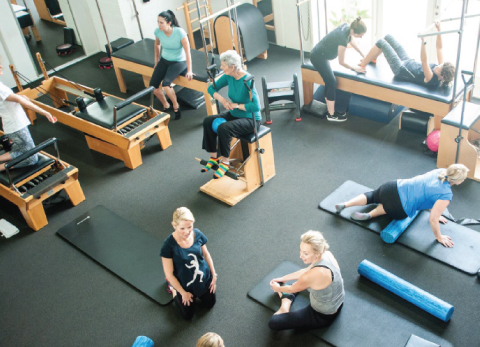
Pilates Principles

List of the principles from Polestar Pilates.

  1. Breath
  2. Core control
  3. Spinal articulation
  4. Head, neck and shoulder organisation
  5. Weight-bearing limb alignment
  6. Movement integration

Understanding these principles will help you understand the ‘why’ behind ‘what’ you are doing in your Pilates session, and this is essential to get the most out of whatever you do.


Why you should focus on the Pilates Principles:

  • It’s easier to understand a handful of principles, relative to memorizing hundreds of different exercises (even thousands, if variations are included).
  • Advanced exercises are just a combination of the principles put together. If one or more of the basic building blocks are missing, advanced movements will be very difficult to achieve.
  • The connection between Pilates and injury, Pilates and other movement disciplines; Pilates and sporting performance; and Pilates and personal movement goals, are easier to see when you understand the Pilates Principles.

So, don’t be afraid to talk to your Pilates instructor or physiotherapist about the Principles, so that you can learn how they relate to the individual Pilates exercises you’re doing, and your health and wellbeing.

_ _ _

Start your Pilates journey at The Body Refinery – Register today.

Follow us on FacebookInstagram and Twitter for a daily dose of Pilates and Wellbeing.
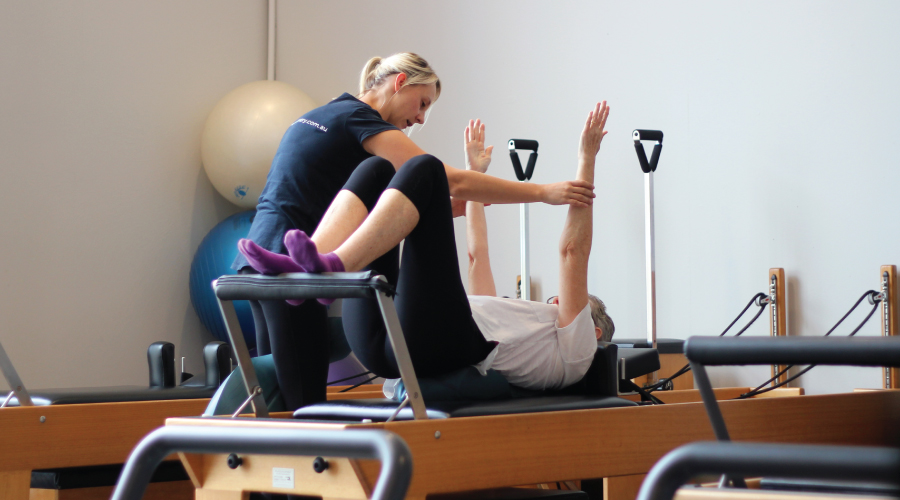
Physio and Pilates – the ultimate combination

Pilates Physiotherapy Combination

A combination of Physiotherapy and specific exercise protocols in a Pilates program are the key to a successful Pilates workout.

Why change something if it’s not broken?

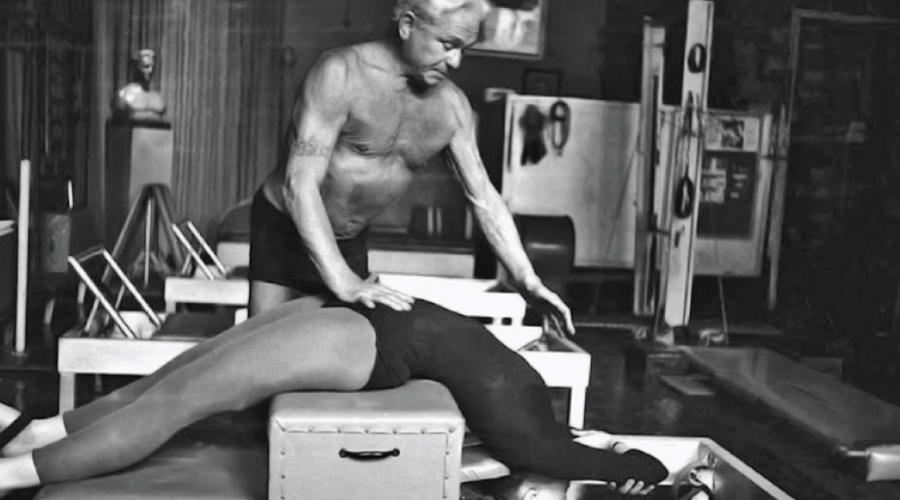
Pilates has been around since the early 1920’s. Recently, physiotherapists have started returning to exercise-based therapy and in particular, the Pilates method, which can provide a number of benefits, according to evidence-based studies (3).

The first Pilates teaching courses for physiotherapists in Australia started in the early 1990s, with an aim that Pilates would be another tool for physiotherapists to use. Postgraduate training (by teachers such as Butler, McKenzie, Sahrmann and Janda) along with spinal stability training and muscle energy techniques all had a part to play in adapting Pilates to a clinical setting (4).

Physiotherapists in Australia have traditionally used a “hands-on” approach in the acute stages of injury, which provides excellent outcomes to a point, beyond which exercise is a logical progression. Unfortunately, most patients progress to a gym setting that is often not appropriate or specific enough to address the underlying biomechanical causes, and all too often this aggravates the original problem.

Combination Pilates Physiotherapy

Research over the last two decades has shown that the most effective way to manage spinal instability is with specific exercise programmes that are designed, and supervised, by a physiotherapist. Improving activity of the core group of muscles is now accepted as being more effective than other training regimes that focus on strengthening periphery muscles (4). Motor re-learning strategies that look more at muscle and movement efficiency are replacing strength and power regimes (3).

“The success of the Pilates system in managing pain, inhibiting pathology and training coordinated movements, is that it gives the physiotherapist a tool to be able to address the motor control specifics of dysfunction and more importantly problem solve the reason or pathology behind the situation” (4)

The value of Pilates to physiotherapists now extends beyond rehabilitation exercises, which act as an adjunct to treatment, to being a very effective treatment tool in itself.  It can be employed as an alternative to “hands-on” management, helping the clinician to confidently progress to a more pathology-specific exercise regime rather than a programme of generic exercises (2).

_ _ _

Join our Clinical Pilates classes and focus on your health and mind-body connection. Call us on 07 3358 3915 or download our app.

Follow us on Facebook, Instagram and Twitter for a daily dose of Pilates and Wellbeing.
__________________________________________________________________________________

References

  1. Lim E et al (2011) Effects of Pilates Based Exercises on Pain and Disability in individuals with persistent Nonspecific Low Back Pain: A Systematic review with Meta-analysis. J Orthop Sports Phys ther Vol 21 (2)
  2. Tulloch E, Phillips C, Soles G, Carman A, Abbott H (2012) DMA Clinical Pilates Directional Bias Assessment: Reliability and Predictive Validity JOSPT: 42(8):676-687
  3. Wajswelner H, Metcalf B, Bennell K (2012) Clinical Pilates versus General Exercise for Chronic Low Back Pain: A Randomised Trial. Med. Sci. Sports Exerc, Vol.44 No 7, PP1197-1205
  4. Phillips C (2003) Pilates, the clinical changes are key. Musculoskeletal Physiotherapy Australia Newsletter IN TOUCH issue 2/3 2003
  5. Rydeard R, Leger A, Smith D (2006) Pilates-Based therapeutic Exercise: Effect on subject with nonspecific chronic Low Back Pain and Functional Disability: A Randomized Controlled Trial.  JOSPT 2006;36(7): 472-484