
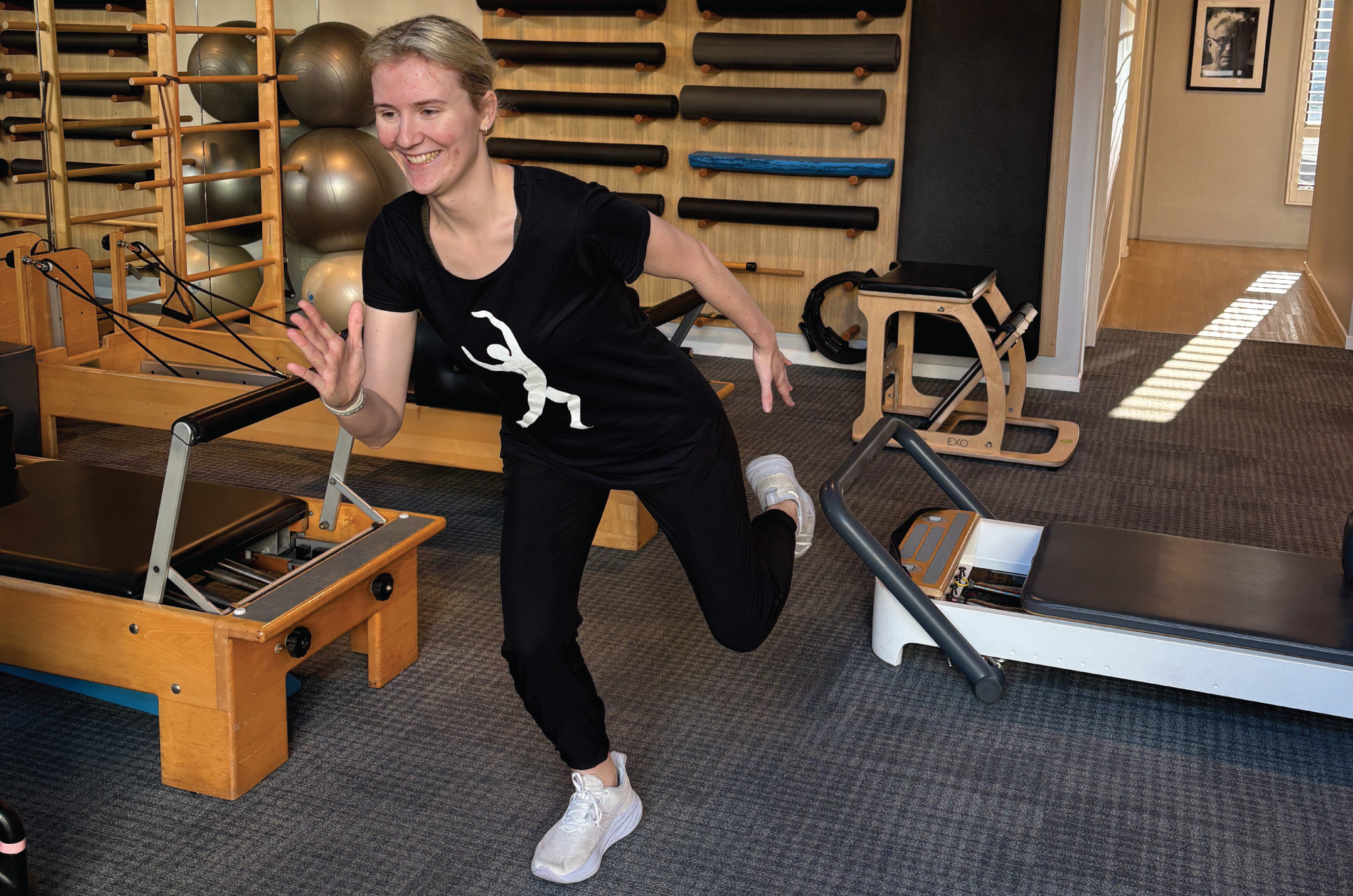
Heading into the cooler months, we are fast approaching my favourite time of the year – Ski Season! Whether you’re travelling south or heading overseas, now is the time to start thinking about what you can be doing to help strengthen your body and prevent any injuries that’ll slow you down on the slopes.
Skiing and snowboarding are popular winter sports that challenge the lower and upper body as well as your balance and coordination on slippery terrain. There are many exercises and routines that you can start before hitting the slopes to make sure you get the most out of your holiday.
The main muscle groups that contribute to skiing are, of course, the quads and hamstrings, but you also use a fair amount of your core and glutes to keep you stable and upright. We’ve put together a shortlist of 6 of the best exercises so you can get a head start on the ski season and make the most of your upcoming holiday.
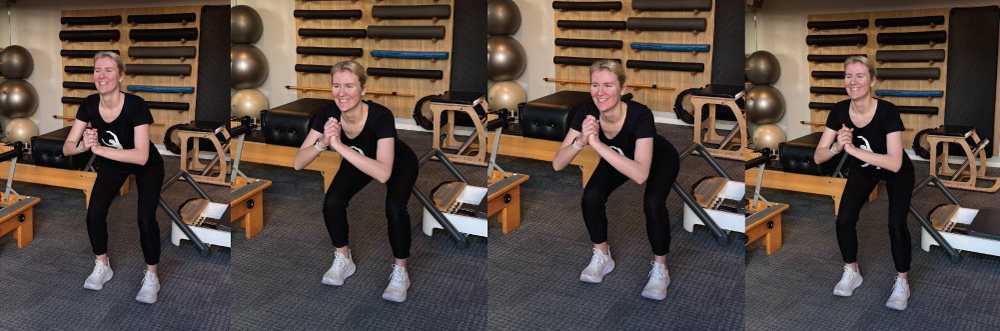
Exercise 1: The humble squat
Squats are some of the best ways to get our legs ready for skiing, as they directly mimic the movements required on the slopes. Not only do they help to strengthen your quad muscles, but they can also help to strengthen and stabilise the knees.
- Stand with your feet shoulder-width apart.
- Engage your core muscles and gently squat down, do not allow your knees to travel too far forward, and keep your weight on your heels, not your toes.
- Your knees should stay aligned with your toes.
- Tense your bottom muscles at the bottom of the squat and keep them tense as you straighten back up to the start position.
- As you squat, bend from your hips and keep your back straight.
3 x 10 reps
Exercise 2: Monster walks with a band
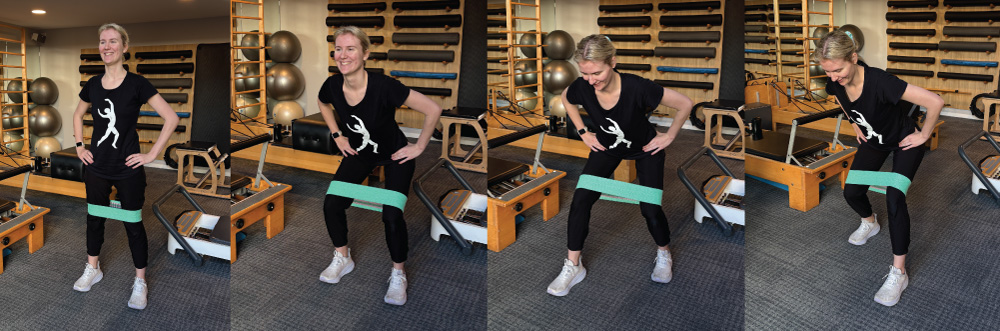
This exercise is similar in set-up to a squat, but adds in some forward and backward movement to strengthen the front, back, and sides of your hips, muscles which are crucial for carving the slopes.
- Stand up straight with a resistance band tied around both thighs, just above your knees.
- Tighten your abdominal muscles.
- Keeping your back straight, tilt your body forward from your hips and soften your knees.
- Your legs should be hip-distance apart, ensuring there is tension in the band.
- Maintaining this position with your body and the same bend in your legs, walk forward for some steps, and then backwards.
2 x 6 laps
Exercise 3: Split Squats
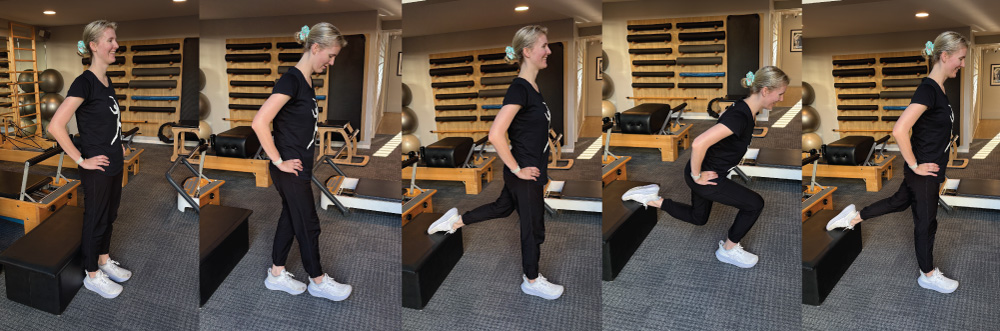
This exercise targets the quads and glutes while improving balance and coordination.
- Stand with a step behind you.
- Take two small steps forward, and place one foot behind you on the step
- Squat straight down allowing both knees to bend.
- Try to keep the shin of your front leg vertical.
- Then return to the starting position.
3 x 8 reps each side
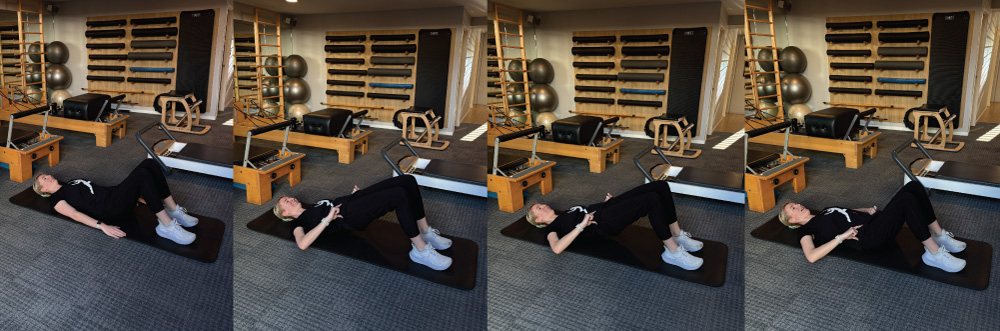
Exercise 4: Glute Bridges
Bridges are another exercise that helps to strengthen the spine, glutes and lower leg muscles.
- Lie on your back with your knees bent and your feet flat on the floor.
- Tilt your pelvis towards you so that your lower back flattens and your tailbone rolls off the floor.
- Now tighten your buttock muscles and continue to peel the rest of your spine off the floor until you are in a bridge position.
- Lower, keeping your navel drawn in and slowly lowering your spine back down onto the floor one vertebrae at a time.
3 x 30 reps
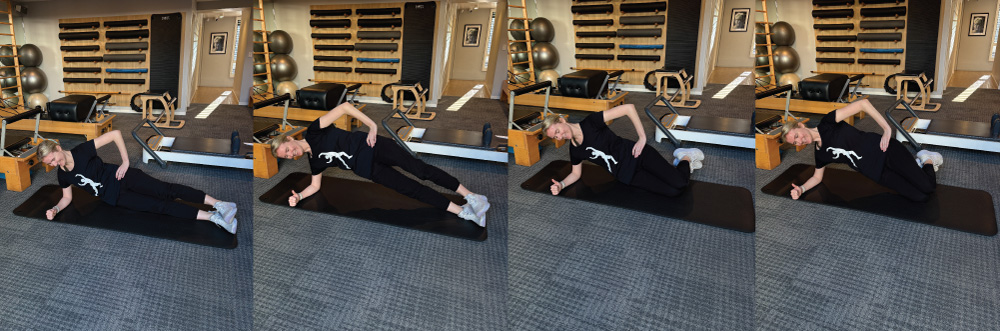
Exercise 5: Side planks
Side planks are a combination exercise designed to help strengthen the oblique and hip muscles. This allows for greater control when turning, and helps to reduce back pain from skiing.
- Lie on your side, propping yourself up on your elbow.
- Keep your legs straight and stacked on top of one another.
- Use your elbow and feet to push the body off the floor, and maintain a straight line from your head to your feet.
- Hold this position for as long as you can, preventing the hips from sagging.
2 x 30 sec hold each side
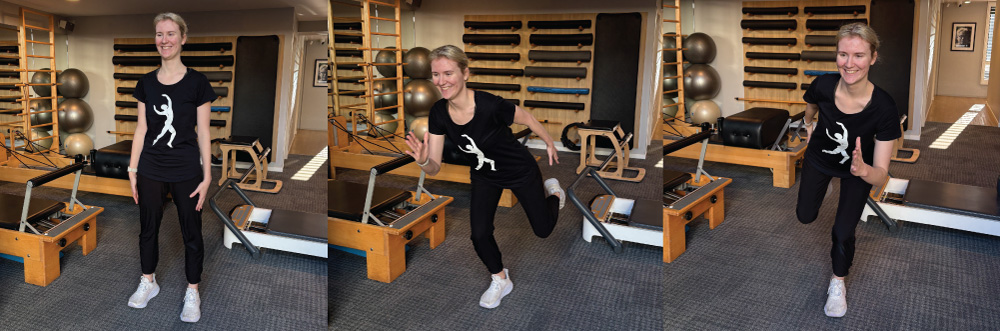
Exercise 6: Lateral Ski jumps
Like some of the previous exercises, this exercise works your quads, glutes and hamstrings. This power exercise helps to prepare the body for the high-energy movements required to control descent and improve endurance on the slopes.
- Stand with your feet hip-width apart and knees slightly bent, balancing on one leg.
- Jump to the side, landing on the other leg. Think about landing softly with your knee slightly bent.
- Then jump to the other side, landing on the other leg.
- Swing your arms sideways across your body like a speed skater.
4 x 30 sec jumps
We at the Body Refinery understand the importance of preparation, whether you’re a beginner or an advanced skier, and our team can help to get you ready for the slopes. With these exercises and our guidance, you’ll be ready to tackle the slopes and make the most of your ski holiday. Don’t forget if you want a more personalised program, you can always book in to see one of our lovely physiotherapists or exercise physiologists for a session.
Book a private consultation with one of our physiotherapists to ensure your body is prepared for skiing/snowboarding season. BOOK NOW
Written by physiotherapist Racquel Bele
_ _ _
References
Hébert-Losier, K., Holmberg, HC. What are the Exercise-Based Injury Prevention Recommendations for Recreational Alpine Skiing and Snowboarding?. Sports Med 43, 355–366 (2013).https://doi.org/10.1007/s40279-013-0032-2
Polevoy, G. G. (2024). The use of special exercises in the preparatory period of skiers. Bangladesh Journal of Medical Science, 23(3), 818-825.
Castañeda-Babarro, A., Etayo-Urtasun, P., & León-Guereño, P. (2022). Effects of strength training on cross-country skiing performance: a systematic review. International journal of environmental research and public health, 19(11), 6522.
Hogg, P. (2003). Preparation for skiing and snowboarding. Australian Family Physician, 32(7), 495–498. https://search.informit.org/doi/10.3316/informit.377398867667738
Morrissey, M. C., Seto, J. L., Brewster, C. E., & Kerlan, R. K. (1987). Conditioning for skiing and ski injury prevention. Journal of Orthopaedic & Sports Physical Therapy, 8(9), 428-437.