

What is coronary artery disease?
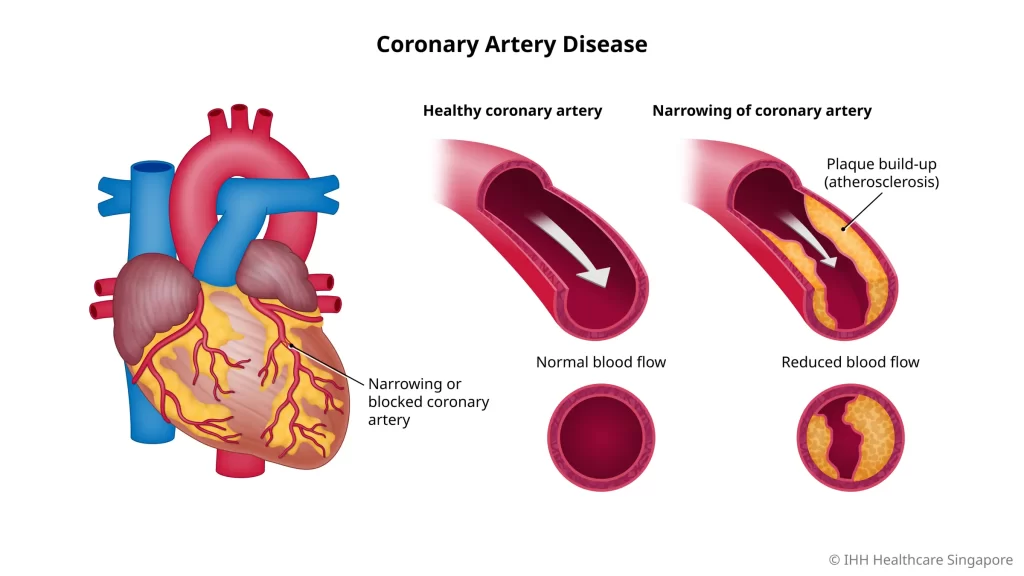
Coronary artery disease (CAD) results from the build-up of fatty deposits in the arteries of the heart, obstructing oxygen-rich blood flow to the heart muscle. This can result in symptoms including:
- shortness of breath
- chest pain
- heart attack (in severe cases)
(National Heart, Lung, and Blood Institute, 2024).
Prevalence in Australia
CAD is the leading cause of death and burden of disease in Australia. More than 2% of Australians report they are living with CAD, accounting for over 590,000 people. CAD claims more lives than any other long-term health condition and is responsible for around one in ten of all deaths (National Heart Foundation, 2026).
Risk factors
Both modifiable and non-modifiable risk factors can contribute to a person’s risk of developing CAD. Modifiable risk factors are generally lifestyle-related, and can include:
- high blood pressure
- high cholesterol
- diabetes
- obesity
- smoking
- poor diet
- sedentary lifestyle.
Non-modifiable risk factors include:
- increasing age
- being of male gender
- ethnicity
- family history
(National Heart, Lung and Blood Institute, 2024).
Prevention and Management
Fortunately, CAD can be both prevented and managed through a range of lifestyle modifications. These include:
- quitting smoking
- limiting alcohol consumption
- eating heart-healthy foods (i.e. avoiding unhealthy fats, salt and added sugar)
- maintaining a healthy weight
- managing diabetes and blood pressure
- increasing physical activity levels.
How does Exercise Affect Coronary Artery Disease?
Exercise can be just as effective as many drug interventions in managing and/or preventing CAD, without the risk of side effects. Regular moderate intensity exercise helps to reduce plaque build-up in the arteries, decrease blood clotting risk, promote blood flow to the heart and aid in maintaining optimal function of the heart muscle. Additional benefits of regular exercise for those living with CAD include improved functionality and psychological wellbeing, along with favourable changes in blood pressure, cholesterol and insulin sensitivity, leading to reduced overall cardiac risk (Exercise is Medicine, n.d.).

Exercise Guidelines and how an Exercise Physiologist can help
A combination of both aerobic and resistance exercise is recommended for people living with CAD (Exercise is Medicine, n.d.).
Aerobic exercise improves the body’s ability to use oxygen as an energy source, thereby improving cardiorespiratory endurance. The guidelines recommend 30-60 minutes of moderate-intensity aerobic exercise per day (e.g. brisk walking), on 3-5 days per week. The intensity of this exercise is also important in achieving the most optimal outcomes, and an Exercise Physiologist can:
- prescribe a safe and appropriate intensity for you and your exercise capacity
- monitor your progress
- periodically update your program
- keep you accountable to goals you set
Full-body resistance exercise is important for those living with CAD, as it improves physical strength and functionality, which is essential for maintaining independence in daily tasks. Guidelines recommend performing resistance exercise on 2–3 days per week. An Exercise Physiologist can help you:
- engage in a variety of full-body strength exercises, individually tailored towards your needs and capabilities
- ensure correct technique, to minimise the chance of injury
- track your progress
- increase your load, as appropriate
- monitor your blood pressure, as required
Next steps
If you are living with CAD or wanting to reduce your cardiac risk, book an initial appointment with one of the Exercise Physiologists at The Body Refinery in New Farm, and start your exercise journey today. We look forward to welcoming you.
_ _ _
References
Exercise is Medicine. (n.d.). Coronary Heart Disease and Exercise. Retrieved from https://exerciseismedicine.com.au/wp-content/uploads/2019/10/EIM-FactSheet_CoronaryHD_Professionals_FINAL-web.pdf
National Heart Foundation. (2026). Key Statistics: Coronary heart disease. Retrieved from Heart Foundation: https://www.heartfoundation.org.au/your-heart/evidence-and-statistics/coronary-heart-disease-key-stats
National Heart, Lung and Blood Institute . (2024, December 27). Coronary Heart Disease Risk Factors. Retrieved from National Heart, Lung and Blood Institute: https://www.nhlbi.nih.gov/health/coronary-heart-disease/risk-factors
National Heart, Lung, and Blood Institute . (2024). What Is Coronary Heart Disease? Retrieved from National Heart, Lung, and Blood Institute: https://www.nhlbi.nih.gov/health/coronary-heart-disease